Video
Killick Hinds & Henry Kaiser
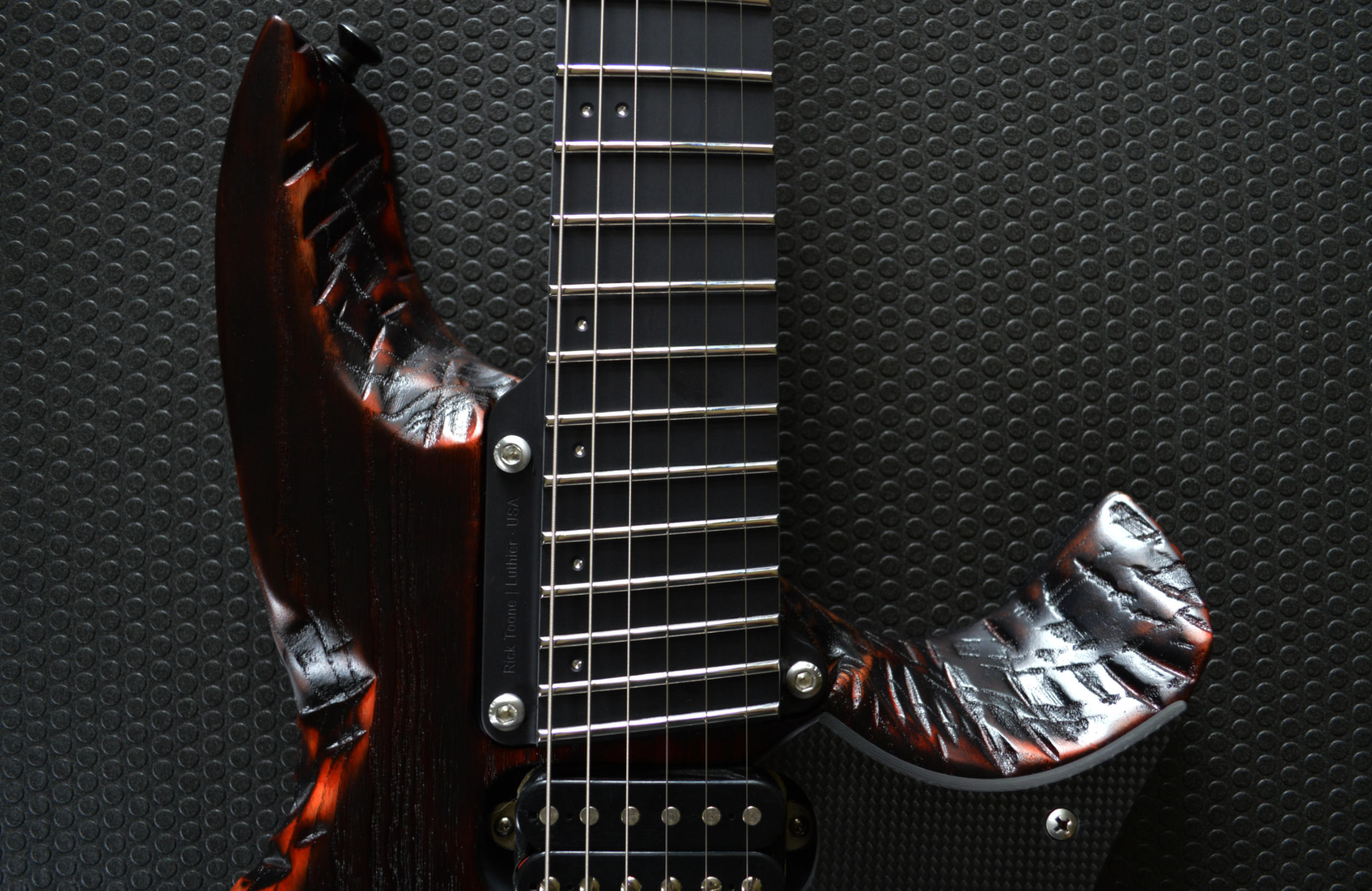
KILLICK HINDS: I ran the fretless eight string to the Schroeder DB7 with a volume pedal (that I seldom used). I also subtly added sustain with a Gamechanger Plus pedal and Collision Devices’ Black Hole Symmetry in its effects loop. The main signal was split before these pedals, with one half going to a volume pedal and then activating Plogue’s Chipsounds via Jam Origin’s MIDI Guitar 2 in the computer. The Schertler piezo on Demi’s headstock ran into an Elite Acoustics StompMix mixer (which contributed occasional delay) into a Henriksen The Bud amp.
It was good working with Henry on this…our sensibilities match extraordinarily well. Playing with the video felt the closest to playing a concert since March.
I’ll add it was recorded with my cellphone against a makeshift green screen made of a picnic tarp and an old clothing rack. The assembly is not quite big enough for the task, so framing was a little tricky, but it worked out very well.
I’m really pleased to share this (as I know Henry is) and am very grateful he suggested the project. I thank Cuneiform Records for their continued support of new and exciting music. And most importantly, thanks to everyone for watching and listening.
RICK TOONE: Cool! He has software that works with green screen?
KILLICK HINDS: Yes, I think Final Cut Pro. I have iMovie and that works with it as well. This was my very first green screen experience.
RICK TOONE: Quite awesome. So you were in Athens and he was…?
KILLICK HINDS: Yes, I was in Athens and he was in California.
RICK TOONE: Could you hear each other during recording?
KILLICK HINDS: I played to the movie first. Then Henry played to my audio and the movie.
Ede Wright | Goshawk Blues
Last night, Ede sent me the link to this video. I’ve probably listened a dozen times and still not caught all of his grace notes and sly references (Steely Dan, Yngwie Malmsteen) in this blues riff. I don’t know if people fully appreciate how truly great of a player he is.
“Thanks, Rick. The clean tone of this amp with the Red Guitar is the best I’ve heard. Goshawk really blends with the (Glaswerks Zingaro) in a beautiful way. It’s a bit of a departure from what you may be used to hearing me play, but I’m trying to show more of my range in these videos. Doesn’t hurt that Goshawk has more range than I do.” (Ede Wright)
Ede Wright | Redwood Spearfish


“Gorgeous! It resonates complicated realities with warmth. Beautiful framing and light, too.” (Killick Hinds)
“Moved almost to tears. That is great. I heard sadness with joy underneath.” (Ken Kinter)
“Thanks very much guys. This lockdown kind of robbed me of creativity for a while, the gut punch of reality made me turn inward for a bit. I’m trying to channel that into something resembling a slight incline.” (Ede Wright)
Killick | Alfred University
Killick Hinds performs live with Walrus 6-string guitar at Alfred University on February 24, 2020. Many of his unusual and innovative techniques are on display: playing behind fretting hand, neck contact mic, external friction devices, string damping, combined with foot-controlled software and organic tube amplification via his custom Schroeder.
This was part of a Sound Design seminar on February 24th, 2020 at Alfred University in Alfred, upstate NY. I also have video of my performance with the Ergo bowed instrument and all the class discussion as well. For some reason the video soundtrack features a non-stop hip-hop drum loop instead of what transpired. (This is inexplicable, although I’m going to sample the loop for a new piece.) I had my field recorder running and that’s what you hear on the Walrus section. The Ergo speaker was too close to the field recorder so that sound isn’t usable, and the class discussion is nearly inaudible at times. The good ones always get away!
It was a delight presenting my craft and artist practice experiences with the students and instructors…I learn a ton through such interactions. With the Walrus I was running the humbucker output and a contact mic each through volume pedals and then directly into the computer to occasionally add some 8-bit sounds via MIDI Guitar 2. The guitar sounds and chipsounds were summed to mono and broadcast through amp and speaker. At the beginning I’m using my fretted and fretless wedges—based on Hans Reichel’s dax—and then at the end I’m indeed using a full sized stripper pole. (Killick Hinds)